Progress Tracking
Most organizations can describe their support system.
Few can prove it worked.
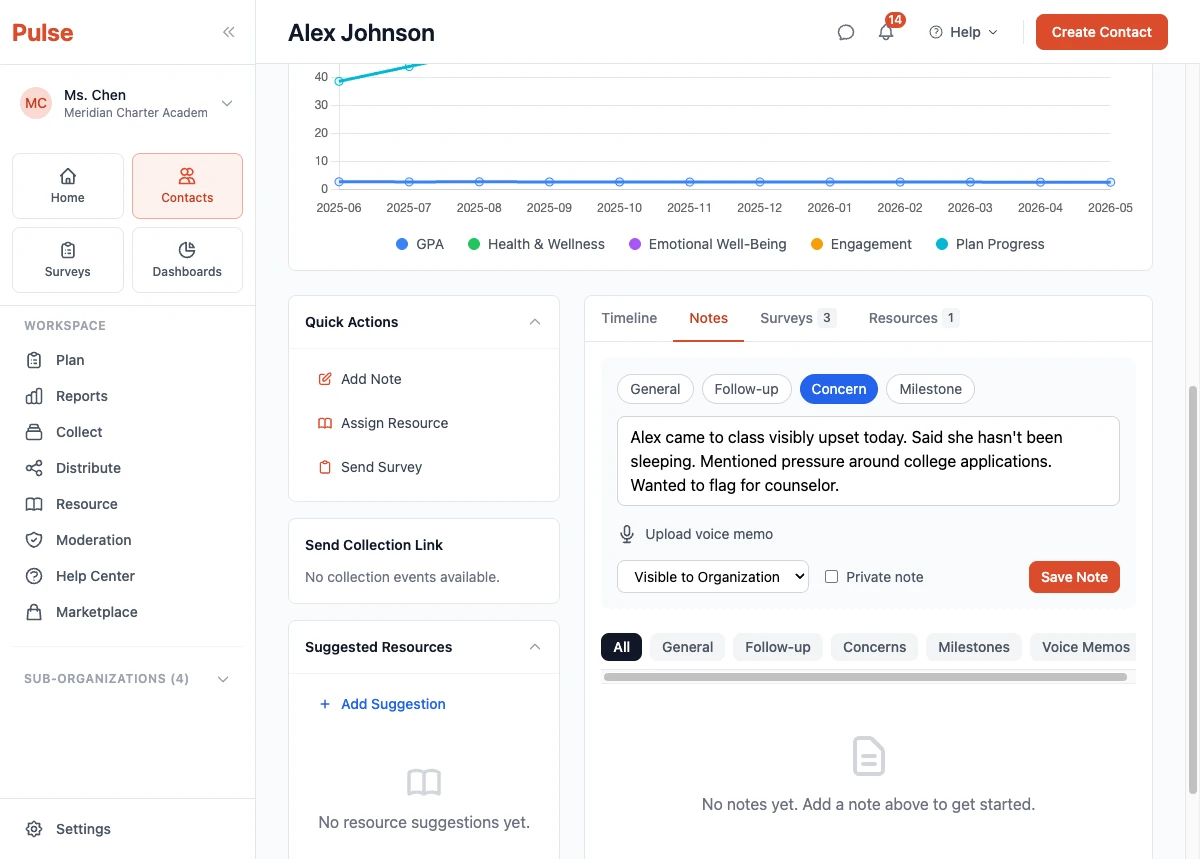
Pulse builds a complete longitudinal record of every person who was supported, every intervention tried, and every outcome measured. Automatically, as a byproduct of daily use. When your board asks for evidence, it's already there.
A complete record. Built automatically. No extra work.
"Student was involved in a verbal altercation near the east hallway during passing period. Raised voices observed by two staff members. Student appeared distressed."
Self-paced resource covering recognition of conflict triggers, de-escalation language, and reporting pathways. Estimated completion: 20 minutes.
One-on-one session focusing on coping strategies and peer relationship dynamics. Student engaged well. Follow-up session recommended in two weeks.
System detected three consecutive failing scores in Math (52%, 48%, 44%). Automatic escalation triggered per district academic watch policy. Teacher notified.
Interactive module covering time management, note-taking techniques, and test preparation strategies. Designed for middle school learners.
30-minute meeting with parent/guardian to discuss academic performance trends and available support resources. Parent agreed to daily homework check-in.
Why most tracking systems fail
Spreadsheets get abandoned. Dedicated tools require coordinators. Pulse builds the record automatically.
Branching Minds requires a dedicated coordinator just to keep the system updated. Spreadsheets work until they don't and then they're missing three months of data. Most documentation systems require separate effort to maintain. Pulse builds the record as a byproduct of work your team is already doing. No extra steps. No dedicated role. No retroactive data entry.
Every concern flagged creates a record entry automatically. No manual logging required.
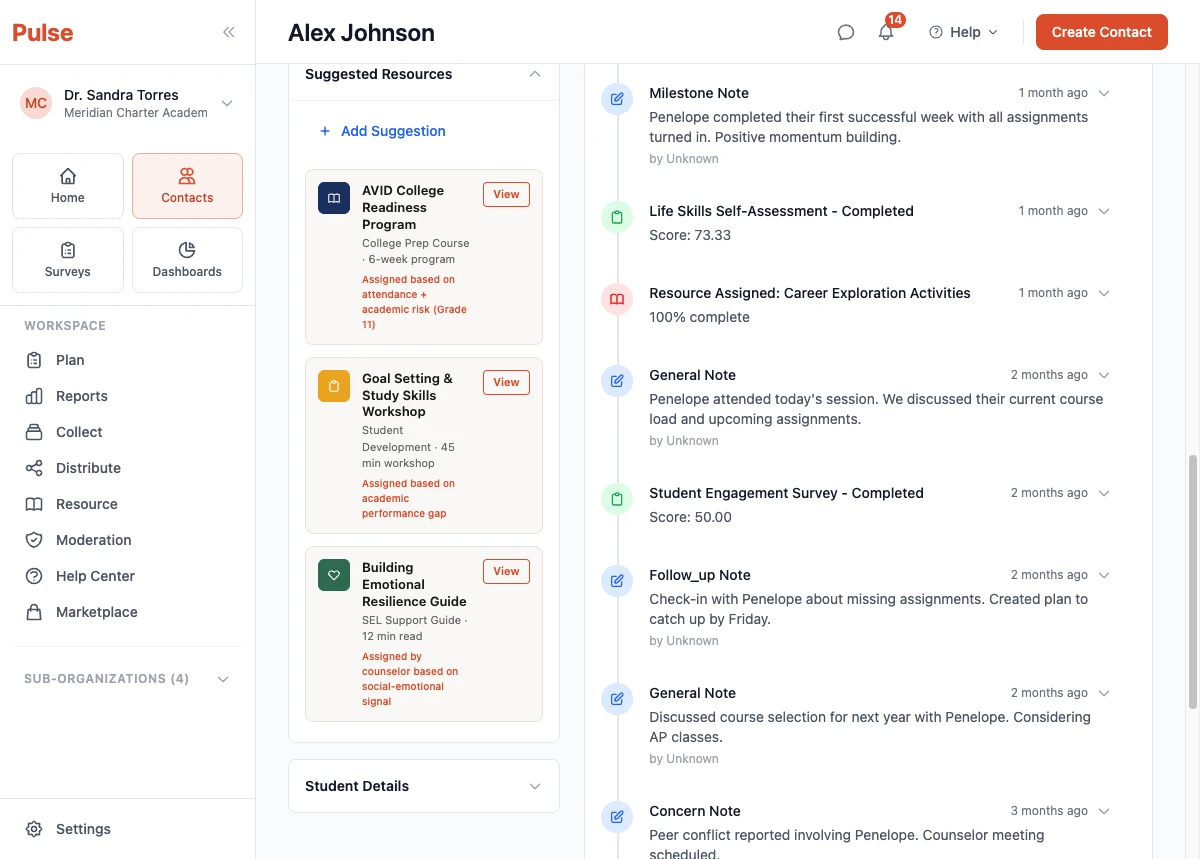
Every resource assigned gets timestamped and tied to the person's longitudinal record.
Every intervention closed creates a resolution entry. The audit trail closes itself.
The record survives leadership transitions because it lives in Pulse, not in someone's head or inbox.
What the record contains
Everything that happened. When it happened. What came next.
Concerns flagged.
Every concern submitted for this person, with timestamp, type, who flagged it, and how it was routed. The beginning of every support interaction is captured.
Interventions taken.
Every action the responder took: resources assigned, meetings held, referrals made. Each with a timestamp and the name of the person who acted.
Resources completed.
Which resources were accessed, which were not, and when. The record shows whether the support actually reached the person, not just whether it was assigned.
Outcomes measured.
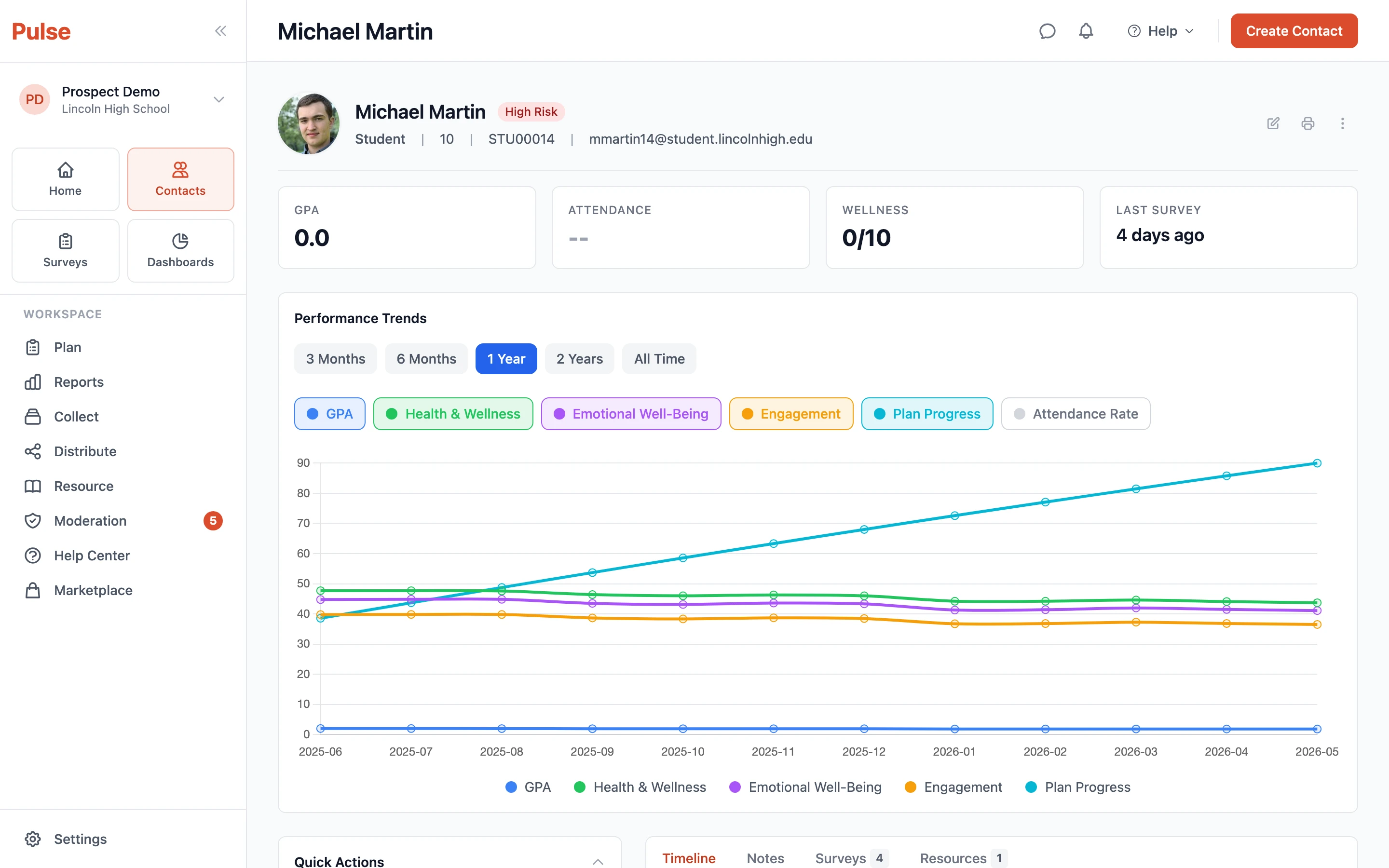
What changed after intervention. Whether the concern was resolved. How long the resolution took. The longitudinal trend across weeks, months, and years.
What changes when you have a complete record
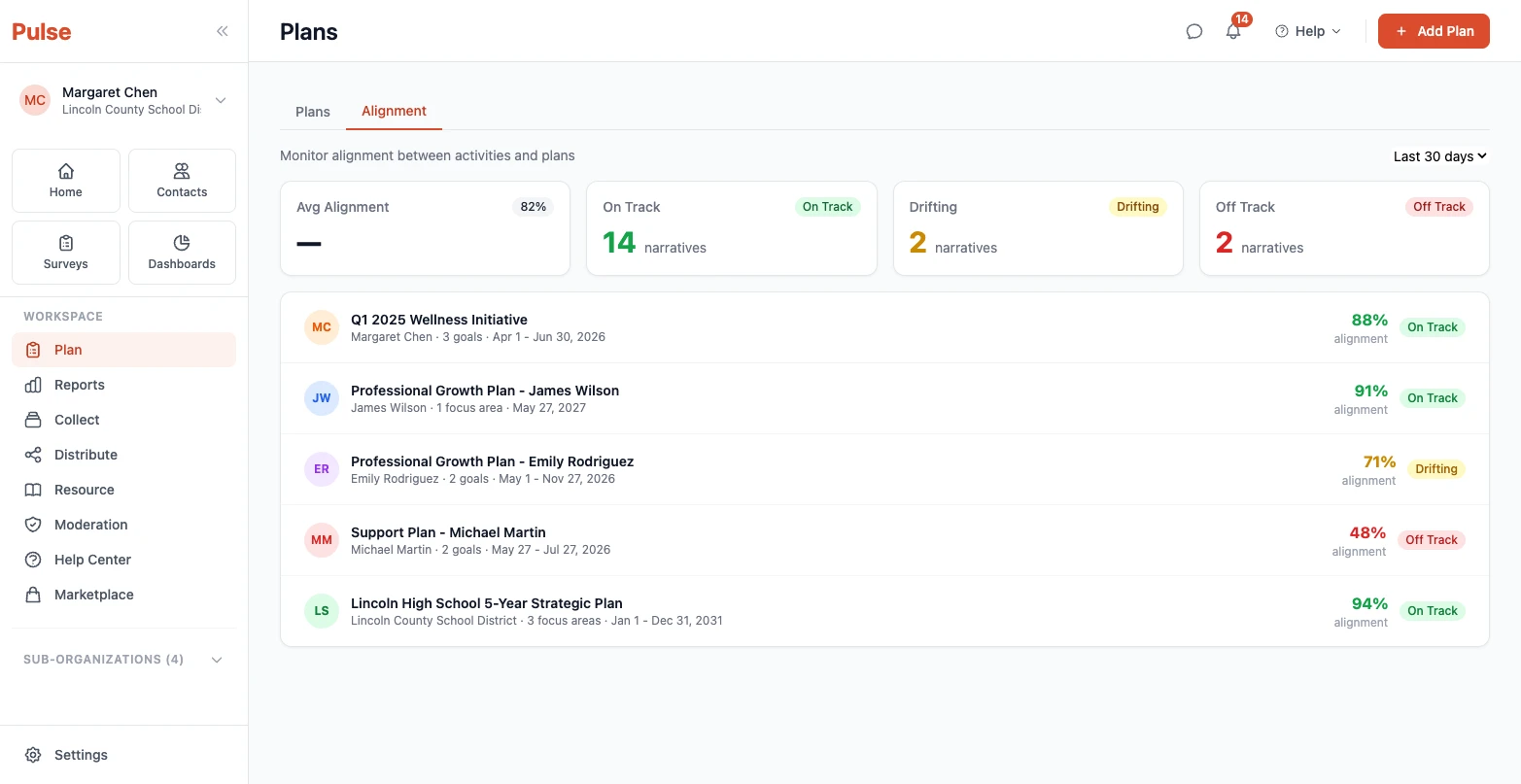
Evidence instead of guesswork. For every audience that asks.
Month 1
You know what was done for each person.
Not what you think was done. What was actually done, when, by whom. A complete picture of every person in your system, without having to chase down notes or check inboxes.
Month 3
You see what's working and what isn't.
Which interventions lead to resolution. Which resources get used and which don't. Which concern types keep recurring for the same people. The pattern view that only longitudinal data can show.
Month 6+
Your board has evidence, not a presentation.
When a board member asks whether your support system is working, you don't need to build a slide deck. You show them the record. Concern volume, resolution rate, time to close. Already there.

What's different about Pulse tracking
No extra steps. The record builds itself.
Every other tracking system requires someone to decide to document something. Pulse builds the record as a byproduct of the work your team is already doing. Flag a concern. The record starts. Route it. The record updates. Close it. The record completes.
That's what makes the record trustworthy. It wasn't assembled for a board meeting. It's what actually happened, captured in real time.
For organizations running after-school or community-based programs, attendance is the first data point that feeds this record. Learn more about attendance tracking software for youth programs and how it connects to the broader support ecosystem.
Looking for a full breakdown of what to evaluate when choosing a tracking platform? Read our guide to the top features for tracking student progress — focused on what makes a difference after implementation, not just in a demo.
See what a complete support record looks like.
30 minutes. We'll show you the full contact record, the longitudinal view, and how the documentation gets generated automatically.
Book a Meeting