Resource Intelligence
The right resource, to the right person,
at the moment they need it.
Pulse reads every signal — the concern flag, the risk indicator, the pattern signal — and surfaces the exact right resource for each person. Content, courses, providers. Assigned by the system, not by someone's memory of what's in the library.
Support that reaches people, not just sits in a library.
The problem with resource libraries
The problem isn't having resources. It's getting them to the right person before the moment passes.
Every organization has a resource library. Most of it never reaches the people who need it. Generic training gets deployed broadly and lands nowhere. By the time the right resource is identified and suggested, the person has moved past the moment. Pulse uses live signals to route specific support to the specific person who needs it right now.
Resource libraries get built. They don't get used because nobody connects them to specific people.
Broad training deployments miss the 20% who actually need it while wasting time for the 80% who don't.
Coordinators can only recommend resources they remember. The library is bigger than any one person's working knowledge.
Without a signal to trigger routing, the right resource arrives too late or not at all.
What Resource Intelligence routes
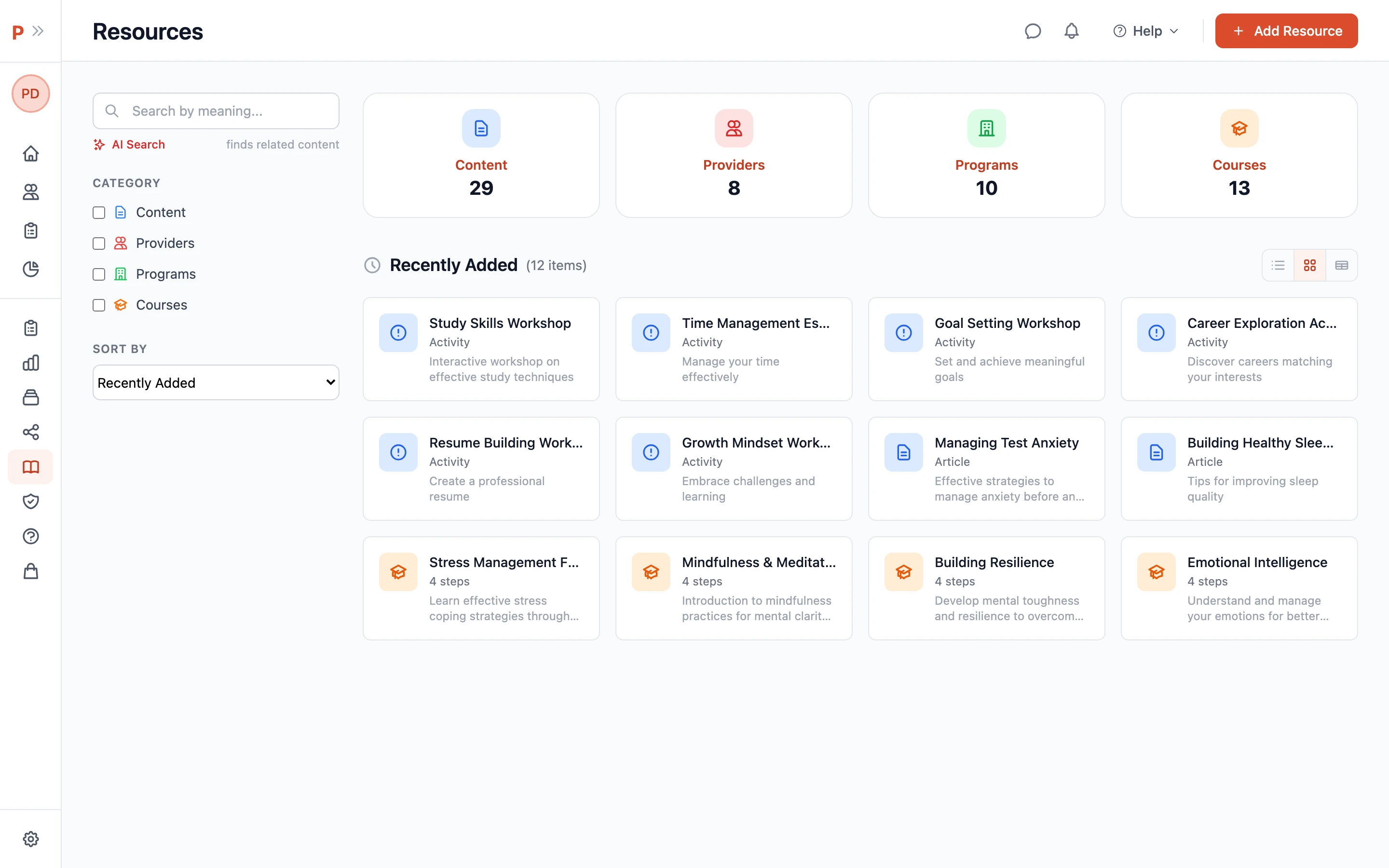
Three types of support, matched to each person's actual signals.
Content
Articles, guides, and documents matched to the specific concern type. The person sees exactly what's relevant, not the full library menu.
Courses
Professional development and structured learning paths triggered by live signals. Not assigned because it's quarter-end. Assigned because the signal says now.
Providers
External support resources, specialists, and service providers matched to the specific need. Surfaced by Pulse without requiring anyone to manually search a directory.
5 Strategies for Supporting Students Through Academic Stress
Research shows that academic stress peaks during midterms and finals — but the warning signs often appear weeks earlier. Here is how to spot them early and intervene before the moment passes.
When students begin withdrawing from classroom participation, that is often the first indicator...
Building Emotional Resilience
Dr. Sandra Kim, LPC
Licensed Professional Counselor
How Resource Intelligence works
Signal. Match. Assign. Track.
A signal is captured.
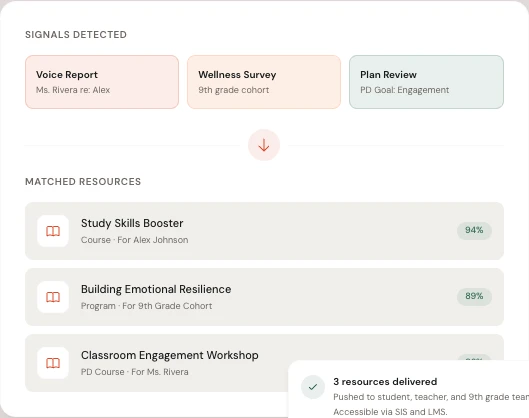
A concern flagged by voice, a risk indicator in the data, a pattern surfaced across check-ins. Pulse receives the signal and begins matching.
Pulse matches resources.
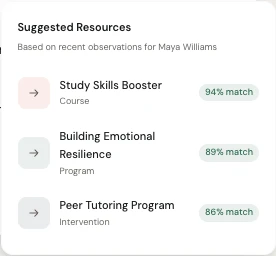
Based on the type of concern, the person's history, and your resource library, Pulse surfaces the resources most likely to help. Not the full catalog. The right ones.
Resources are assigned.
The responder sees matched resources alongside the concern and assigns with one click. The person receives the resource. The assignment is logged in their record.
Completion is tracked.
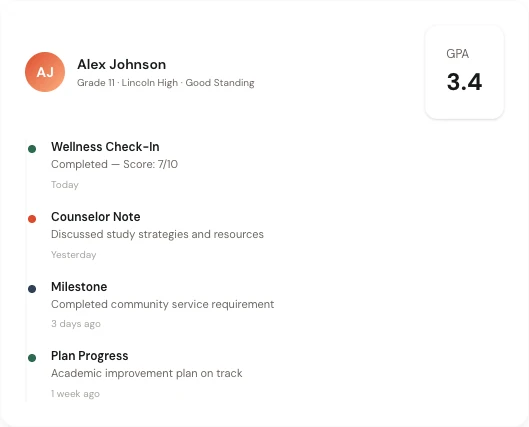
Pulse tracks whether the resource was accessed. If it wasn't, the system flags it for follow-up. The record shows what was recommended, what was completed, and when.